

Picture a Tuesday afternoon in Bradford. You have worked since morning, slept badly after Suhoor, and the kettle in the office kitchen is calling. You walk past it anyway. That small act is Sawm, and the reason behind it matters more than the hunger.
For Muslims, fasting in Ramadan is worship and obedience to Allah. You stay away from food and drink in daylight hours. The purpose goes further than an empty stomach, because Sawm also asks you to watch your actions, your speech and the way you treat people.
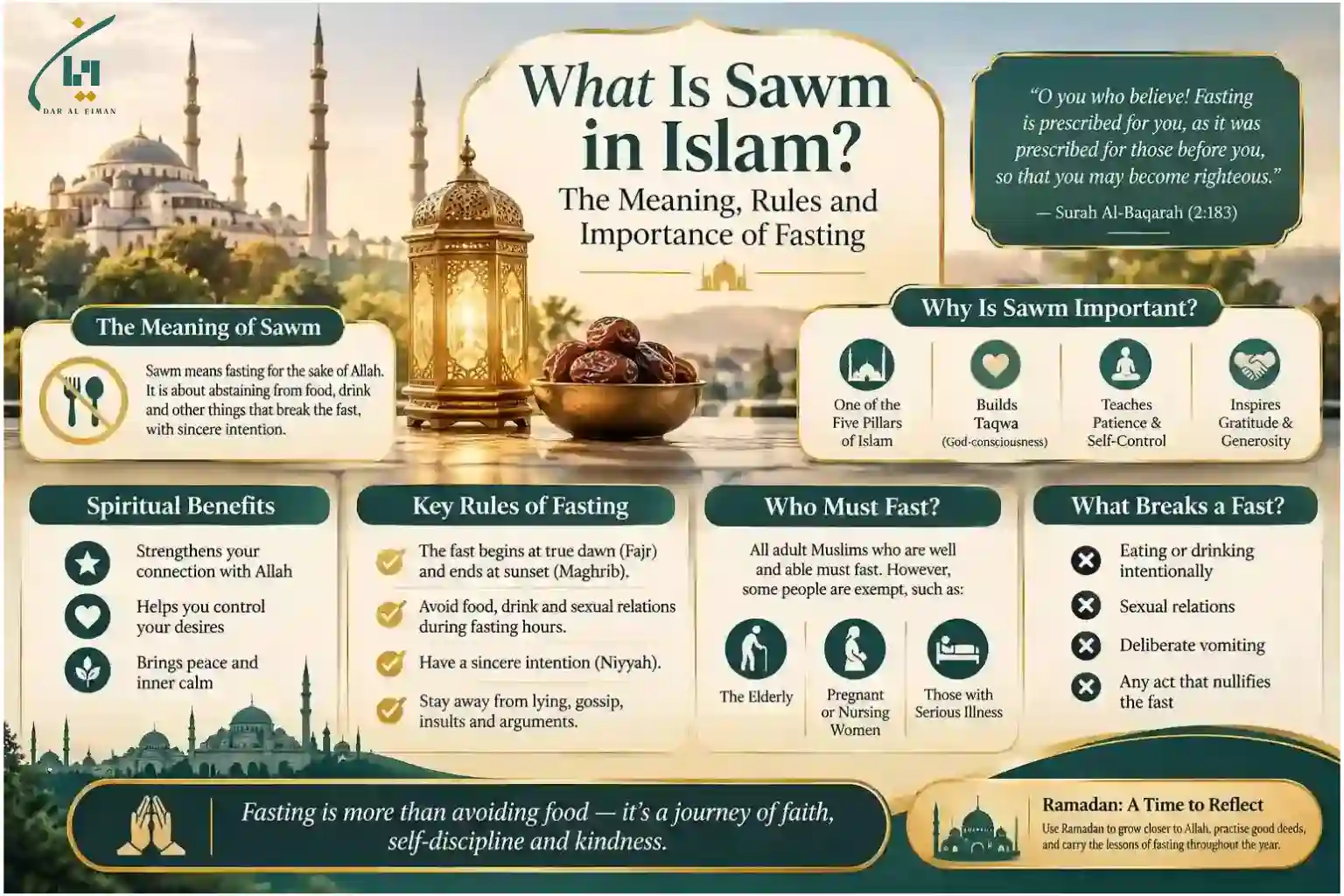
Surah Al-Baqarah (2:183) explains why. Allah prescribed fasting for believers, as He did for those before them, so that they may develop Taqwa. Fasting is a chance to build faith, practise self-control and stay aware of Allah in ordinary life.
What Is Sawm in Islam?
Sawm means fasting for the sake of Allah. In Ramadan, Muslims abstain from eating, drinking, sexual relations and anything else that breaks the fast. The fast starts at true dawn, when Fajr begins, and ends at sunset.
Staying hungry is not fasting. Someone who skips lunch because of a deadline has not kept a religious fast. The intention to fast for Allah is part of the act itself.
Good conduct matters too. Muslims are encouraged to avoid lying, gossip, insults and pointless arguments. You can finish the full day without food and still miss the point if your tongue stays harsh.
The Prophet Muhammad ﷺ described fasting as a shield, and he advised fasting people to avoid quarrels. So the body and the behaviour both need attention.
Meaning of Arabic Term Sawm
The Arabic word Sawm carries the sense of holding back or abstaining. Siyam is another word for fasting. In Islamic practice, Sawm means abstaining from the things that break the fast, from dawn to sunset, with the intention of worshipping Allah.
That meaning explains why restraint sits at the centre. Food and water are sitting right there in your kitchen. You choose to leave them alone because Allah asked you to, not because you lack access.
Over time, that habit teaches you to pause before you act. You start to think a little harder about your words, your choices and your daily routines.
Why Is Sawm Important in Islam?
Fasting in Ramadan is one of the five pillars of Islam. The Prophet ﷺ taught that Islam is built on five foundations: the declaration of faith, Salah, Zakat, Hajj and fasting in Ramadan. So for Muslims who meet the conditions, it is a duty, not a lifestyle option.
The month also changes your routine on purpose. You wake before dawn for Suhoor, keep your five prayers, go without food and drink through the day, and break the fast at sunset. Those changes nudge you to think about your relationship with Allah. Ramadan gives you a full month to look at your habits and try to improve your worship.
Spiritual Connection Between Fasting and Taqwa
The clearest reason for fasting is the one in Surah Al-Baqarah (2:183): Taqwa. People often describe it as being conscious of Allah and mindful of His guidance. It shapes the choices you make, including the ones nobody sees.
Fasting gives you daily practice. Imagine you are alone in a quiet office in Leicester with a packet of biscuits in the drawer. Nobody would ever know. You leave it shut because Allah knows.
That awareness should not stop at mealtimes. Use Ramadan to become more careful about honesty, relationships and responsibilities, and about how you treat the people around you. The goal is not good behaviour for one month. It is to carry what you learn into the other eleven.
The Role of Patience and Self-Control in Sawm
Fasting tests patience in very ordinary moments. You slept less because of Suhoor, the commute was slow, a task went wrong, and your throat is dry by three o’clock. Still, you are expected to stay calm and treat people properly.
The Prophet ﷺ advised fasting people not to quarrel. If someone tries to provoke you, you do not have to answer in the same tone. This works well outside Ramadan too. You do not need to react to every disagreement or voice every angry thought, and staying calm is often the better reply.
Fasting is a humble practice to train your desires. You wait for water until sunset even when you want it at noon. With practice, that restraint spills into other parts of life.
How Fasting Builds Gratitude and Generosity
Food and water are easy to take for granted. After a long fast, though, a glass of water or a plate of dates and a simple meal can feel like a treat. That feeling can make you more thankful for things you usually overlook, like your health, your family, a warm home and a full fridge.
Fasting makes you think about people who go hungry. Be honest about the gap, though. A Ramadan fast is not the same as poverty. Most fasting Muslims know a meal is waiting at sunset, while a person facing food insecurity may not know when they will eat next.
Let that difference turn into action. Give Sadaqah, provide a meal, help a struggling relative or support a charity you trust (a local food bank in your own town is a good place to start). Gratitude does more good when you act on it.
What Are the Main Rules of Fasting in Islam?
A valid Ramadan fast has a few basic requirements. Learn them before the month begins.
Fasting time: The fast begins at true dawn, when Fajr starts, and ends at sunset, when Maghrib begins.
- Food and drink: You must avoid eating and drinking during those hours.
- Sexual relations: It is not permitted while you are fasting.
- Intention: You must intend to fast as an act of worship.
- Behaviour: Stay away from lying, gossip, insults and arguments.
The intention is called Niyyah, which means a sincere decision to fast for Allah. Schools of thought differ on when and how to make it, so follow a scholar you trust.
Suhoor, the pre-dawn meal, is recommended and gives you energy for the day. Missing it does not break your fast, as long as you made the intention and met the other conditions.
Some questions need specific answers. Medication, injections, inhalers, medical procedures and dental treatment all fall here. Rulings can vary with the circumstances and the scholarly opinion, so ask a qualified scholar about the religious side and a doctor or pharmacist about your health.
Who Is Obligated to Fast in Ramadan?
Fasting is generally obligatory for adult Muslims who have reached puberty, are of sound mind and are physically able to fast.
Children do not have to fast before puberty. Many parents introduce it slowly, perhaps a half day at first, once the child is old enough to manage it safely.
Islam also allows exemptions. The Qur’an mentions illness and travel, and people in those situations can make up the missed days later. Women do not fast during menstruation or postnatal bleeding, and they make up those Ramadan days afterwards.
Pregnancy and breastfeeding raise extra questions. If you worry that fasting could affect your health or your baby’s, ask for guidance that fits your situation. The same care applies if you live with a long-term illness. An elderly person, or someone with a lasting condition, may have different responsibilities from someone who is only temporarily unwell. These cases need individual advice, not a general rule.
Who Is Exempt from Fasting?
Islam gives concessions to people who cannot fast safely or reasonably. What you owe afterwards depends on why you could not fast.
- Temporary illness: If illness makes fasting hard or harmful, you may miss the day and make it up when you recover.
- Travel: A traveller may use the concession, within the relevant conditions, and make up the day later.
- Menstruation and postnatal bleeding: Women do not fast during these times and make up the missed days.
- Pregnancy and breastfeeding: A woman may skip the fast if she genuinely fears harm to herself or her child. Scholars differ on how missed days are made up.
- Long-term illness or old age: Someone who cannot fast and will not regain the ability may owe Fidyah, depending on the case and the guidance followed.
An exemption does not mean everyone in a category should automatically stop. The details matter. If you are unsure of your own position, speak to a qualified scholar who can look at your situation.
What Invalidates a Fast During Ramadan?
Some actions break the fast when you do them deliberately during fasting hours:
- Eating on purpose.
- Drinking on purpose.
- Sexual relationship during fast time.
- The start of menstruation or postnatal bleeding.
Other cases need a fuller answer. Vomiting, medication, injections, inhalers, smoking and medical procedures cannot be settled with one blanket rule. The ruling depends on what happened and which scholarly opinion you follow.
There Is a Special Reward for Those Who Fast
One of the most well-known Hadith about fasting mentions Ar-Rayyan.
The Prophet ﷺ said there is a gate in Paradise called Ar-Rayyan through which those who fast will enter.
For Muslims, this gives fasting another dimension. The hunger eventually finishes.
Thirst finishes too. But the reward being hoped for is much greater than the discomfort of one fasting day.
What If You Accidentally Eat or Drink While Fasting?
It happens to almost everyone at some point. You reach for a biscuit, take a bite, and then remember.
If you truly forgot, stop as soon as you remember and carry on with your fast. You do not need to end the day early. The Prophet ﷺ taught that a person who eats or drinks forgetfully should complete the fast, which is a comfort for anyone who makes an honest slip.
Eating or drinking on purpose is a different matter. If that happens, seek guidance about repentance, making up the day and whether anything else is owed.
What Are Qada and Fidyah?
If you miss Ramadan fasts, you may owe something afterwards. Two terms come up often: Qada and Fidyah.
Qada means making up a missed fast on another day. If a bad flu stopped you fasting in Ramadan, you would fast that day once you are well.
Fidyah is a payment or food given for someone who cannot fast because of a lasting condition and is not expected to recover. It is meant to feed a person in need.
The two are not interchangeable. A temporary illness usually means Qada. A permanent inability may mean Fidyah. Pregnancy, breastfeeding and long illness can bring differences between scholars, so confirm your own responsibility with a qualified scholar. Do not assume that paying Fidyah replaces missed fasts in every case.
What Is the Difference Between Obligatory and Voluntary Fasting?
Ramadan fasting is obligatory for Muslims who meet the conditions. Islam also encourages voluntary fasts at other times of the year. They add extra worship and reward, but they never replace the Ramadan fasts.
Well-known examples include:
- Monday and Thursday: Many Muslims follow the example of the Prophet ﷺ here.
- The Day of Arafah: Fasting the ninth of Dhul Hijjah is recommended for those not performing Hajj.
- Ashura: Fasting the tenth of Muharram is recommended, and many also fast the day before or after.
- Six days of Shawwal: You may fast six days in Shawwal after Ramadan.
Fasts linked to vows and expiation have their own conditions. If you owe one, ask for proper guidance.
How Can Muslims Prepare for Sawm During Ramadan?
Preparation means more than stocking up on rice and dates. Making a few arrangements through preparation for Ramadan 2027 can help you feel more settled when fasting begins.
Adjust Your Sleep
Suhoor and Fajr change your sleeping pattern. If you usually stay up late, move your bedtime earlier before Ramadan so the early mornings hit less hard.
Build a Qur’an Habit
Not reading much lately? Start with a few pages a day. Pick a target you can keep, not one that collapses in week one.
Learn the Basic Rules
Know when the fast starts and ends, what breaks it and who is exempt. If you take regular medication or live with a health condition, talk to your GP and seek Islamic guidance before the month begins.
Plan Your Meals
Choose filling foods for Suhoor and Iftar, and drink plenty of water between sunset and dawn. Do not let every evening turn into a giant feast. Ramadan is also for worship and reflection.
Check Your Local Timetable
Fasting times differ across the UK. The Ramadan timetable for Cardiff will not match one for Glasgow, so use one made for your own area and check Fajr and Maghrib.
Preparing for Ramadan Umrah from the UK
Some Muslims from the UK plan Umrah during Ramadan, which means fasting preparation & travel planning come together. Flights, hotels, visa arrangements & transport can become harder to organise during popular travel periods.
Dar Al Eiman currently has Umrah Packages from UK which include Ramadan 2027 options alongside other seasonal departures. The available packages currently include flights, accommodation, visa & transport depending on the selected option.
Visa rules should also be checked properly before travelling. Their current Umrah Visa guidance explains the service / visa information currently being offered for UK pilgrims.
If you’re specifically planning the holy month, current Ramadan Umrah Packages 2027 include different 2027 Ramadan options across several trip lengths.
Sort the practical things early. Then you have more space to focus on why you’re actually going.
Final Thoughts
Sawm is a central act of worship in Islam. You abstain from food, drink and the other things that break the fast, but the purpose runs deeper than restraint.
Ramadan gives you time to grow closer to Allah, practise patience and think harder about what you do. It can also make you more grateful and more willing to help people in need.
Knowing the rules matters as much as knowing the purpose. Once you understand who must fast, what breaks a fast and when exemptions apply, you can keep the month with a steadier mind. Then try to hold on to the habits after Eid so the lessons last past the month.