

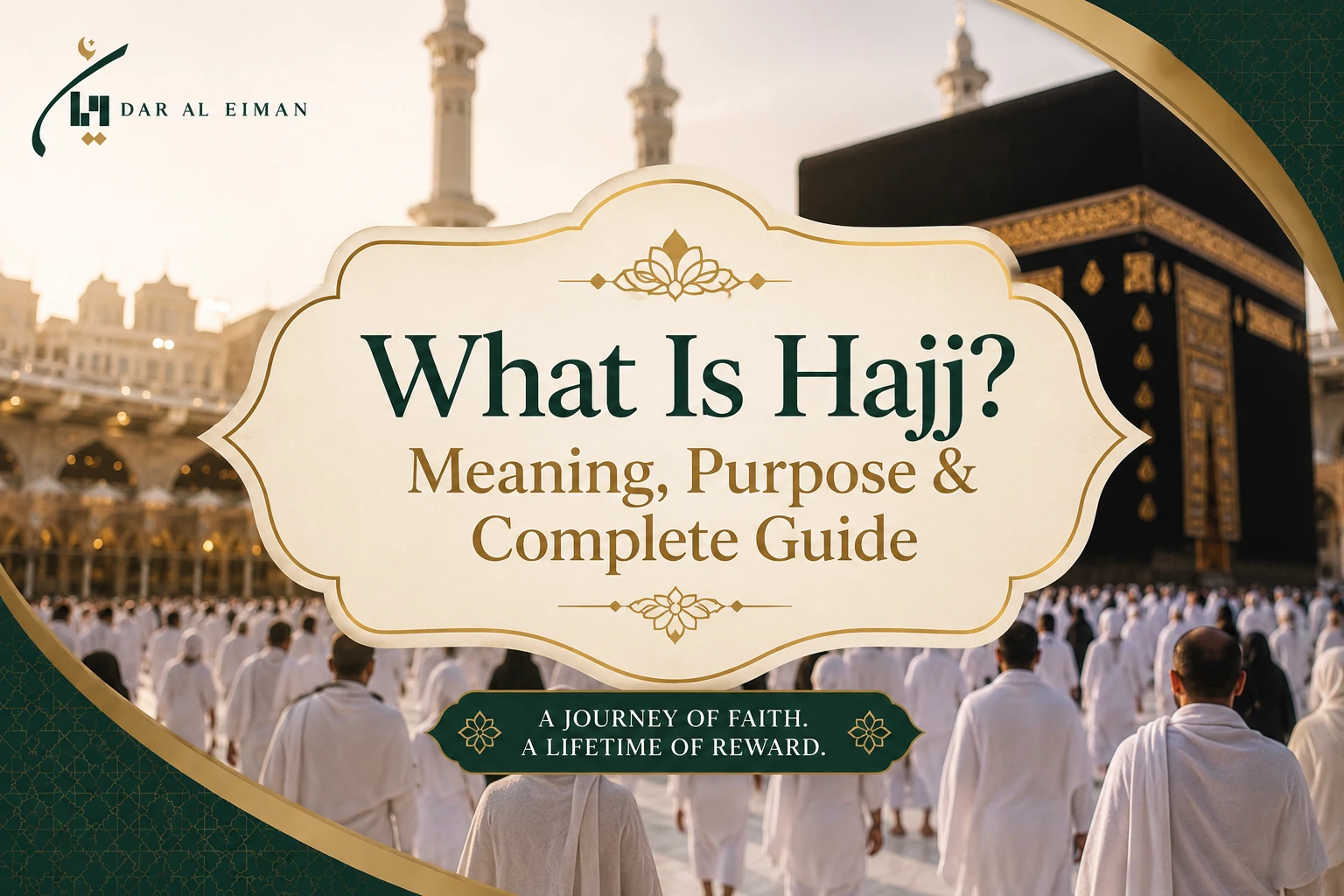
What is Hajj? Hajj is the fifth pillar of Islam and also an obligatory worship for Muslims. It is more than a physical pilgrimage to Makkah but a profound spiritual experience, offering reflection, humility, and renewal of faith. However, standing among millions of believers, all dressed simply and equally, reminds us that sincerity and devotion matter above all in the eyes of Allah.
If you are willing to perform Hajj 2026, plan your journey with care and make it meaningful, and be guided from the UK with Dar Al Eiman Travel. Plan your spiritual journey today.
What Is Hajj and Why Is It Important in Islam?
Hajj is a sacred journey to Makkah that takes place during the holy month of Dhul-Hijjah. For every adult Muslim who has the health and the savings, this pilgrimage is a vital pillar of faith. Its true beauty lies in how it brings the global Muslims together.
Regardless of wealth and language, all are equal in front of Allah. It is a blessed opportunity to seek forgiveness, cleanse our previous mistakes, and come back with a pure and tranquil heart.
What Is the Purpose of Hajj?
Hajj is one of the five pillars of Islam and a sacred journey that strengthens the bond of a Muslim with Allah. It inculcates humility, patience, unity, and total submission to the Maker. In Makkah Muslims from every country, culture, and background come together, wearing basic white clothing to remind us all that before Allah all people are equal.
The Hajj is also to remember the sacrifices and faith of Prophet Ibrahim (AS), Hajar (AS), and Ismail (AS). For many believers it is a life-changing moment of forgiveness, spiritual rejuvenation, and serious introspection. An acceptable Hajj by Allah can cleanse the heart and transform a person’s life permanently.
Who is Obligated to Perform Hajj?
Hajj becomes obligatory only when certain conditions are met. Islam does not burden a person beyond their ability. A Muslim must:
- Be an adult
- Be physically capable
- Have sufficient financial means
- Ensure their family is supported during their absence
- Be able to travel safely
Choosing a reliable company helps ensure that the pilgrimage is organized properly according to Islamic guidelines while also providing comfort and guidance. Like group Umrah packages, we also offer Hajj packages with clear guidance. If you are ready for this holy journey, then book your Hajj package from Dar Al Eiman Travel now.
Understanding the Difference Between Hajj and Umrah
A lot of people start their spiritual path by going on Umrah first. They often pick a 5 Star Umrah packages to stay comfortable while they get used to the holy sites. It’s a great way to prepare before they take on the obligation of Hajj. Even though both journeys are sacred, they work very differently.
The Major Pillar: Hajj
- You can only do this during the specific days of Dhul-Hijjah.
- It is a mandatory duty once in your life if you are able.
- It involves a much longer and more intense series of acts.
The Beautiful Sunnah: Umrah
- You can perform Umrah whenever you want during the year.
- It is highly rewarded, but it is not a mandatory pillar of Islam.
- The rituals are much shorter and don’t take as much out of you physically.
What are the main rituals of Hajj?
Hajj is so much more than a set of rules. It is a spiritual trip for several rigorous days, when every step takes the believer closer to Allah. It’s a rare chance to get away from the clamor of the world and focus totally on your faith.
1. Ihram: Embracing Simplicity
Before you even reach Makkah, you enter a sacred step called Ihram. However, men wear two plain white outfits, and women dress in modest, loose clothing. Meanwhile, it is not just about clothes, but it is about stripping away worldly status. At the door of the Haram, we are all equal. It is where you make your intention (Niyyah) and start the Talbiyah, letting the words fill your heart.
2. Tawaf: Circling the Kaaba
Tawaf is walking around the Kaaba seven times. However, it is a powerful sight where thousands of people move as one. And they all run for one reason to worship Allah alone.
3. Sa’i: Walking Between Safa and Marwah
This part of the trip honors the struggle of Hajar (AS). When you run between the two hills seven times, it makes you remember the patience and trust in Allah’s plan. However, it is a physical lesson in never giving up hope.
4. Arafat: The Core of the Journey
The Day of Arafat is the soul of Hajj. You are praying and asking for mercy, and you are emptying out your heart in earnest dua. It’s an emotional ‘reset button’ for the soul. The Prophet (PBUH) stated, “Hajj is Arafat.” When you stand there, you realize what really matters.
5. Muzdalifah and Mina: Staying Firm
After sunset in Arafat, you go to Muzdalifah to rest and collect pebbles. However, when you reach Mina, you use these pebbles to ward off Satan. Meanwhile, it is a reminder to remain strong in your faith and avoid the whispers of Satan.
6. Qurbani and Eid: The Spirit of Sacrifice
This journey leads to Eid al-Hajj, starting with the sacrifice that honors the obedience of Prophet Abraham (PBUH). Sharing meat with those who have nothing teaches us compassion and generosity. It is the perfect way to wrap up the rituals.
What are the Different Types of Hajj
There are three major types of Hajj in Islam. All are valid forms of pilgrimage if done correctly, each being slightly different in method and intent.
Hajj Tamattu
Hajj Tamattu is the most common type for pilgrims traveling from other countries. In this type, a person first performs Umrah during the months of Hajj, then comes out of Ihram and later enters Ihram again for Hajj. It gives pilgrims a short break between Umrah and Hajj, making it easier for many travelers.
Hajj Qiran
In Hajj Qiran, the pilgrim performs both Umrah and Hajj together with one Ihram and one intention. The pilgrim remains in the state of Ihram until all Hajj rituals are completed. This type requires more patience because the restrictions of Ihram continue for a longer period.
Hajj Ifrad
Hajj Ifrad is when a person performs only Hajj without including Umrah. In this type, the pilgrim enters Ihram only for Hajj and completes all the required rituals. This is often chosen by those living closer to Makkah or those not intending to perform Umrah with Hajj.
Every kind of Hajj is special and has a great spiritual reward. The choice typically depends on the pilgrim’s circumstances, travel plans, and personal preference.
How to Prepare for Hajj the Right Way?
Preparing for Hajj is important. You must be physically well and spiritually awake. If you are ready, you can spend more time at Ibadah and less time worrying about the heat.
Here are some practical tips:
- Learn the rituals of Hajj in advance
- Stay physically active to build stamina
- Pack only the necessary items
- Be patient in large crowds
- Keep your intentions pure and focused on Allah
Proper planning with a team like Dar Al Eiman makes the whole experience much smoother. Many find that starting with an Umrah Packages UK is a great way to prepare for the logistics of the Holy Cities.
Hajj is the call from Allah Almighty to His home to reset the button on your soul. It’s a deeply personal journey of humility and pure devotion to the Creator. If you are starting to plan your Hajj package from the UK, let the team at Dar Al Eiman arrange everything for you. Whether it is your first time or you want to travel with family, like our family, Umrah packages are available, and we make sure your Hajj is smooth and spiritually fulfilling.
Frequently Asked Questions
How long does Hajj take?
Usually, the core rituals take 5 to 6 days, though your total travel time depends on your specific flight and hotel dates.
What should I wear for Hajj?
Men wear the Ihram (two white sheets). Women wear modest, loose clothes. Keep it simple and respectful.
Can I perform Hajj if I have health issues?
Hajj involves a lot of walking. If you aren’t feeling 100%, talk to your doctor first. There are ways to get help on the ground, but your safety comes first.
How do I prepare my soul for Hajj?
Learn the steps, make a sincere plan to change for the better, and ask for forgiveness before you leave. Spiritual readiness is just as important as your suitcase!