

Looking for how to perform Umrah? But before that, you must know what Umrah is? It is a sacred act of worship in Islam performed at the Kaaba, built on clear rites like Ihram, Tawaf, and Sa’i, that place a believer in direct submission to Allah. It holds deep importance because it cleanses sins, softens the heart, and renews faith through action, not words alone.
The reward is not symbolic. The Prophet Muhammad ﷺ described Umrah as a means of removing past sins, giving it real spiritual weight for anyone who performs it with sincerity. Get an Umrah visa and start your spiritual journey. But before that, you should check the Nusuk App for the latest Saudi Hajj and Umrah updates.
What Do the Quran and Hadith Say About the Virtues of Umrah?
The words are simple, and the meaning is profound because it erases sins and resets you at all.
Allah says in the Qur’an:
“And complete the Hajj and Umrah for Allah.” (Surah Al-Baqarah 2:196)
There is no decoration in that command. It is direct and clear, and it calls for sincerity, not display, and reminds you that every step belongs to Him alone.
And the Prophet ﷺ said:
“From one Umrah to the next is an expiation for what comes between them.”
Think about that for a second. This is not just movement around the Kaaba, but it is a chance to wipe what has built up over time, quietly and completely. You circumambulate, do dhikr, and seek forgiveness, and Allah opens the door to lifting your past sins.
How Should You Prepare Spiritually Before Starting Umrah?
Clean your heart and settle your debts. If you owe a fifth to a partner, pay him. If you haven’t spoken to your sister in a year, call her. You cannot enter the house of Allah carrying the baggage of broken relationships.
Study the life of the Prophet and understand why the Kaaba stands where it is, and internalize the struggle of Abraham. It is important for your spiritual preparation. Without it, the crowd will only annoy you.
Umrah follows a clear sequence, so follow this order and stay focused.
Making the Intention (Niyyah) for Umrah
Everything starts with the “Niyyah.” This is not just a sentence you mutter, but it is a firm resolve in the gut. You are doing this for Allah alone, not for a new title. You say: “Labbayka Allahumma Umrah.” (Here I am, O Allah, for Umrah). Say it with conviction, and it means it. The moment you voice this, the rules change, you have crossed a line, and you are now in a sacred state.
Entering the State of Ihram: What Should You Know First?
For men, this means two pieces of unstitched white cloth, that is it. You should wear no hats or socks, as it feels vulnerable, and also supposed to. It levels the playing field for the billionaire and the street sweeper, who look identical.
For women, there is no specific “uniform.” Wear modest, loose clothing, and do not cover your face or hands with a niqab or gloves while in this state.
You must be in a state of “Ghusl” (ritual bath) and use scentless soap. Once you make the intention, the “Muhrim restrictions” kick in. No clipping nails, no cutting hair, no perfume, and no hunting. Also, no marital relations and no arguing, especially the arguing.
What Is Miqat and Why Is It Important for Ihram?
The “Miqat” is the boundary, and you cannot pass it without being in Ihram. If you fly from London, you will likely cross the Miqat in the air. The pilot usually announces it, but you should not wait for the announcement to start changing, but do that immediately. Get changed at the airport or on the plane early. If you feel a nightmare trying to wrap a towel in a tiny Boeing 787 toilet. Do it at the gate if you have something like that. If you miss the Miqat without Ihram, you owe a “Dam” (a sheep sacrifice). Don’t be that person, and be prepared for it.
Key Rules of Ihram Every Pilgrim Must Follow
Listen carefully, these rules are strict to follow:
- No Scent: This includes scented wet wipes or hotel soap. Buy “Halal” unscented kits before you leave the UK.
- No Hair Removal: Don’t pluck a stray hair, or shave.
- The Head Rule: Men, keep your heads uncovered, no umbrellas touching the head, and no hoodies.
- The Footwear Rule: Your ankles and the top part of your foot (the metatarsal area) must be visible. Flip-flops or specific sandals are your best friends.
What Is Talbiyah and Why Do Pilgrims Recite It?
“Labbayk Allahumma Labbayk…”
The “Talbiyah” is your anthem, it is the vibration of the pilgrim. You recite it loudly (men) or softly (women) from the moment you enter Ihram until you see the Kaaba. It translates to: “Here I am at Your service, O Allah.”
Recite it when you climb a hill, and recite it when you board the bus as well. Recite it when you wake up, it keeps your mind on the target, and it drowns out the noise of the world.
What to Do When You First See the Kaaba
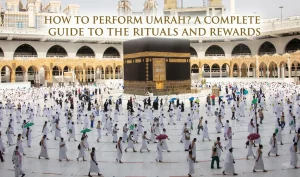
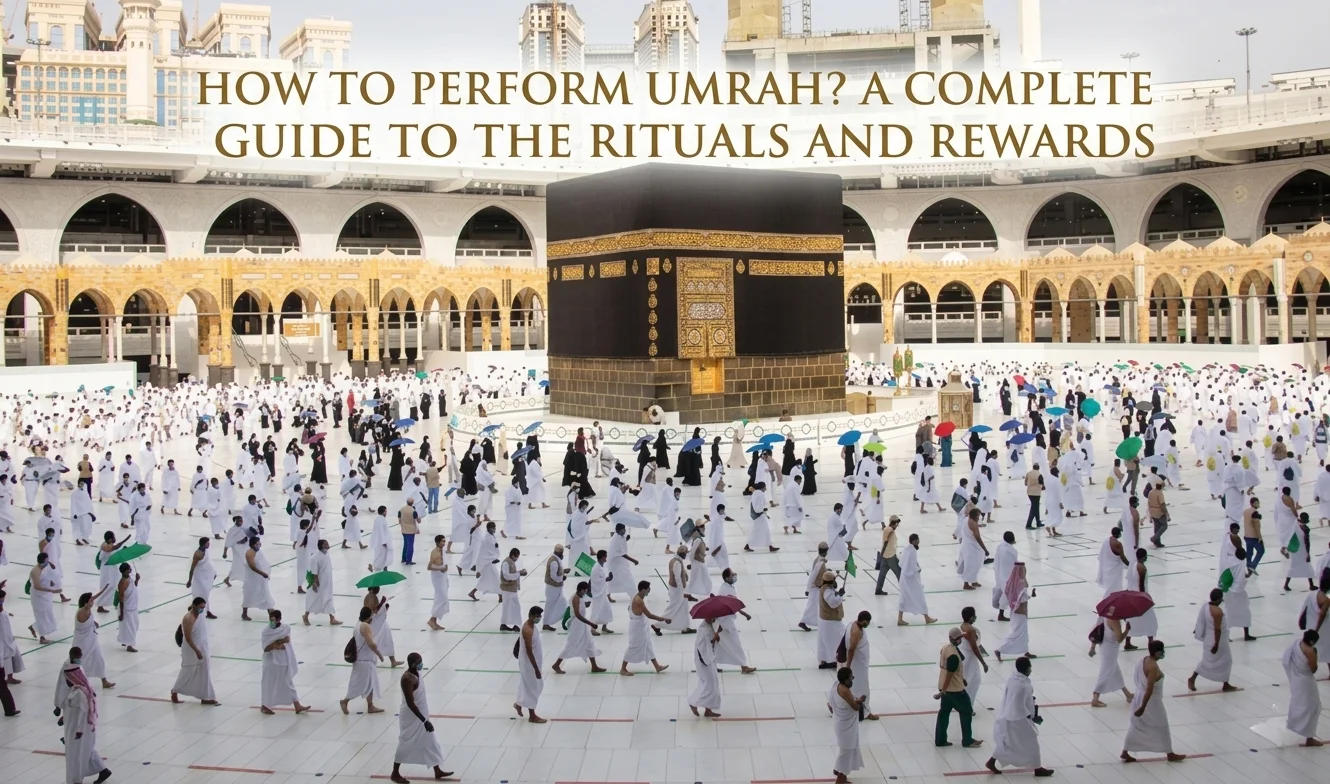
Walk through the gates of Masjid al-Haram, keep your gaze down, and when you reach the opening where the “Haram” expands, look up. The first sight of the Kaaba is a moment where “Dua” (supplication) is accepted. Stop there and move to the side so you don’t get trampled. Cry if you need to and ask Allah for everything, like your forgiveness, health, and children. This is the “Mataf area”, it is the heart of the world.
Step-by-Step Tawaf Around the Kaaba
“Tawaf” is seven laps, and each lap is a “Shawt.”
- Idtiba: Men, uncover the right shoulder. Wrap the top cloth under your right armpit and over the left shoulder.
- The Starting Line: Look for the green light on the wall, it aligns with the Black Stone (Hajar al-Aswad).
- The Gesture: You won’t get close enough to kiss the stone, don’t try, you will hurt someone. Raise your hand toward it and say “Bismillahi Allahu Akbar.” 4 and the Walk Circle counter-clockwise. The first three laps should be a brisk pace (Raml) for men, if space allows. The last four are a normal walk.
- Dua: There are no fixed prayers. Talk to Allah, use your own language. Between the Yemeni Corner and the Black Stone, recite: “Rabbana atina fid-dunya hasanatan…”
- Focus: Keep the Kaaba to your left. Do not turn your chest towards it while walking.
Prayers at Maqam Ibrahim After Tawaf
Once you finish seven laps, cover your shoulder, and move to the area behind “Maqam Ibrahim” (the station of Abraham). If it is too crowded, in 2026 it usually is, move further back into the mosque. Perform two “Rakahs”, and recite Surah Al-Kafirun in the first and Surah Al-Ikhlas in the second.
The Significance of Zamzam Water in the Umrah Journey
Go to the “Zamzam” containers. Drink your fill. The Prophet said Zamzam water is for whatever purpose it is drunk for. Drink it for healing and pour some over your head. It is a mercy. In 2026, the infrastructure for water is world-class. Use the taps and stay hydrated, you will need it for the next part.
Perform Sa’i Between Safa and Marwa
“Sa’i” is the walk between the hills of Safa and Marwa. This is roughly 3.5 km, and your feet will throb. This is the legacy of Hajar searching for water, and it is a ritual of desperation and trust. Follow this:
- Start at Safa. Face the Kaaba and make Dua.
- Walk towards Marwa. When you see the green lights, men should jog, but women should walk normally.
- One way is one lap, and you do seven laps total.
- And you finish at Marwa.
Hajar was left in a barren valley with her infant, Ismail. She ran between these two hills seven times, and she didn’t give up. She did the work, and Allah provided the water. We perform Sa’i to remember that we must do the work, even when the situation looks impossible.
What Are Halq and Taqsir?
It is the final step of your Umrah, and is necessary.
- Halq: Shaving the head (for men) is better, and it represents total submission.
- Taqsir: Cutting a small portion of hair (for women, the length of a fingertip).
Once the hair is cut, you are out of Ihram. You can shower, and you can wear your “normal” clothes. However, you can use scented soap, and you have completed the Umrah.
Common Mistakes Pilgrims Should Avoid During Umrah
- Stopping in the middle of Tawaf: If you need to stop, move to the outer edges. Don’t just stand still, you will cause a pile-up.
- Taking selfies during the rites: Put the phone away because you are there to talk to Allah, not your followers.
- Counting incorrectly: Use a tally ring if you have a bad memory.
- Pushing: You gain no reward by elbowing an elderly woman out of the way to reach the “Multazam” or the “Kiswah” (the black cloth).
Final Thoughts
How to perform Umrah? Steps are not difficult in structure, but they are heavy in meaning. The steps are fixed as Ihram, Tawaf around the Kaaba, Sa’i between Safa and Marwa, and then the final act of releasing the hair. Nothing changes in the order, yet everything changes in the person who performs it.
What shapes Umrah is not movement, but it is presence. You enter with noise in your mind and leave with something stripped away. Old habits feel lighter, sins feel closer to accountability, and the heart does not stay the same after standing in the Haram. If you’re ready for the Umrah, book an Umrah package from UK, and start your spiritual preparation today.
Keep your “Nusuk vouchers” and digital IDs handy. Most importantly, keep your tongue moist with the remembrance of Allah. You are a guest in His house, so act like it.
FAQ’s
Can I perform Umrah on a 2026 tourist visa?
Yes, Saudi Arabia allows Umrah on tourist visas, provided you register through the Nusuk app and obtain the necessary permits.
What if I lose count during Tawaf?
If uncertainty arises, return to the lower number and continue from there to ensure accuracy.
Can a woman perform Umrah alone?
Yes, current Saudi official regulations allow female solo travel, though some prefer group arrangements for convenience.
Can I wear a face mask in Ihram?
Yes, wearing a mask is allowed, especially in crowded areas, and does not affect Ihram.
Can I bring Zamzam water back through the airport?
Yes, but it must be in officially sealed containers, typically limited to one per pilgrim.